Co-Locating Battery Storage with Solar Projects Can Maximize Benefits
The amount of battery storage capacity in the U.S. is expected to continue its rapid acceleration in the coming years, and an increasing amount of that storage will be co-located with solar projects, two new reports indicate.
The U.S. Energy Information Administration reported that monthly storage capacity averaged 70% growth over the last three years. At the end of 2025, the U.S had 43.6 GW of capacity, with an additional 8.3 GW added during the first half of this year. Operators plan to bring another 14 GW online by the end of 2026, and another 27 GW in 2027.
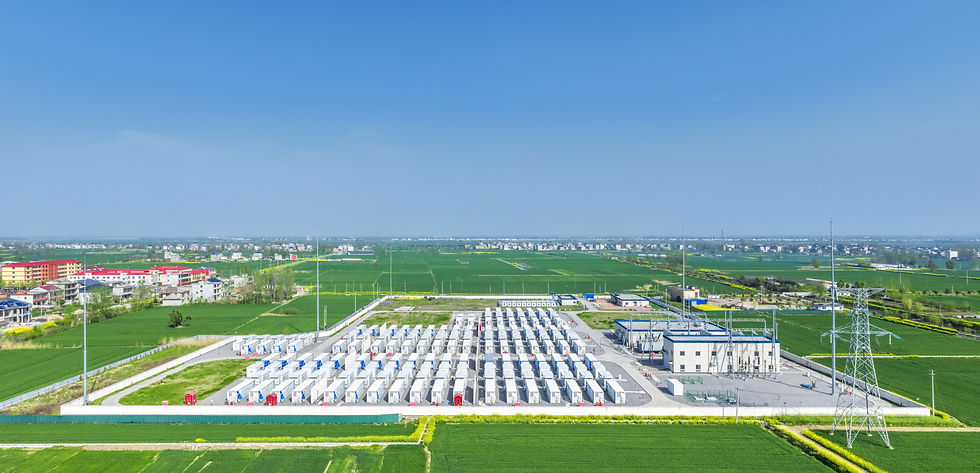
A new EIA report indicates that more utility-scale solar developers are co-locating their arrays with battery storage. Some 16% of new utility-scale solar capacity added through September of this year is co-located with battery storage, up from just 2% in 2017. That trend is expected to continue with co-location reaching more than 30% by 2028, the EIA said.
Utility-scale energy storage systems are increasingly being seen as a way to maximize available solar power as the technology has improved, costs have come down, and the need for more power in the U.S. has risen rapidly. In addition, battery storage projects still qualify for federal tax credits.
By co-locating storage with a solar project, developers can direct the output to the electric grid or to the battery depending on the wholesale price of energy. During the day, when solar provides maximum output, wholesale prices tend to fall, but during peak evening demand hours, wholesale prices rise and releasing stored power to the grid can maximize its value.
In addition, large data center developers are showing increased interest in battery storage to supplement their power needs for the energy-hungry projects. Utility Dive recently reported that data center energy storage is growing quickly, with on-site data center storage deployments reaching 6.3 gigawatts (GW) in 2027, and continuing to rise throughout the decade, according to BloombergNEF data.
The data also indicates that 30% more storage capacity will be deployed across the U.S. than was expected just six months ago. The forecast indicates that the U.S. will have 213.9 GW of storage by 2030, and that will double to 434.4 GW by 2036.
Battery storage will play an increasingly large role in meeting rapidly rising electrical demand across the U.S. and globally, as developers and regulators work to find the optimal balance of energy sources at the lowest cost.


Comments